What Is the Actual Size of a 2x4? Nominal vs. Actual Lumber Sizes
A 2x4 measures 1½ by 3½ inches. Here is why, plus a chart of the real sizes of boards, framing lumber, posts and plywood.
Short answer: a dry 2x4 is 1½ inches thick and 3½ inches wide. The "2x4" is its nominal size, a trade name. The board you carry out of the lumber yard is half an inch smaller in both directions, and every other size of lumber is smaller than its name too.
That gap is the most common reason a first project does not go together. Below is why it happens, a chart of actual sizes you can keep open in the shop, and a short checklist for working with real boards.
Why a 2x4 isn't 2 by 4
Lumber gets its name at the sawmill. A log is sawn into rough pieces, then the pieces are dried and planed smooth on all four sides. Drying shrinks the wood and planing takes off more, so the finished board ends up smaller than the rough size it was named after.
The finished sizes are not left to chance. The American Softwood Lumber Standard (PS 20) sets the minimum dressed size for every nominal size, and the USDA Forest Products Laboratory's Wood Handbook reprints that table (Table 6-6). That is why a 2x4 from any yard in the country measures the same 1½ x 3½ inches.
The standard also defines "dry": dry boards and dimension lumber have been dried to a maximum moisture content of 19%. Lumber that is planed while still green is cut a little oversize so that it shrinks to about the dry size once it dries to around 15%.
Nominal vs. actual lumber sizes chart
These are the standard dry sizes for softwood lumber, the pine, fir and spruce sold at home centers. Two quick rules cover most of it: a 1-inch board is ¾ inch thick, a 2-inch board is 1½ inches thick, and widths lose ½ inch up to 6 inches and ¾ inch from 8 inches up.
| Sold as | Actual size (inches) |
|---|---|
| 2x2 | 1½ x 1½ |
| 2x3 | 1½ x 2½ |
| 2x4 | 1½ x 3½ |
| 2x6 | 1½ x 5½ |
| 2x8 | 1½ x 7¼ |
| 2x10 | 1½ x 9¼ |
| 2x12 | 1½ x 11¼ |
| 4x4 | 3½ x 3½ |
| 4x6 | 3½ x 5½ |
| 6x6 | 5½ x 5½ |
| Sold as | Actual size (inches) |
|---|---|
| 1x2 | ¾ x 1½ |
| 1x3 | ¾ x 2½ |
| 1x4 | ¾ x 3½ |
| 1x6 | ¾ x 5½ |
| 1x8 | ¾ x 7¼ |
| 1x10 | ¾ x 9¼ |
| 1x12 | ¾ x 11¼ |
| 5/4 x 6 (deck board) | 1 x 5½ |
Posts 5 inches and thicker, like a 6x6, are timbers. They are usually planed green, so a 6x6 can arrive heavy and wet and keep shrinking for months after you set it.
Plywood thickness: the sheet is smaller too
Plywood sheets are sold by a rounded thickness, but the panels are slightly thinner. Structural panels now carry a "Performance Category" in the grade stamp, such as "23/32 CATEGORY", instead of a plain nominal thickness (APA, the Engineered Wood Association, explains the labeling). The typical actual thicknesses are:
| Sold as | Typical actual thickness |
|---|---|
| ¼ inch | about 7/32 inch (often less in hardwood plywood) |
| ⅜ inch | 11/32 inch |
| ½ inch | 15/32 inch |
| ⅝ inch | 19/32 inch |
| ¾ inch | 23/32 inch |
Width and length are full size: a standard sheet is 48 x 96 inches. The thickness is what catches people out, mostly in dadoes and grooves. A ¾-inch dado cut for 23/32 plywood leaves a sloppy 1/32-inch gap, so cut grooves to fit the sheet you actually have.
Hardwood is sized differently
Hardwood boards (oak, maple, walnut) are sold by thickness in quarters of an inch, measured rough: 4/4 ("four quarter") is 1 inch rough, 8/4 is 2 inches. Widths and lengths are random. Once a 4/4 board is planed on both faces it usually measures about 13/16 inch, but it depends on how the yard surfaced it. Measure before you plan.
Lengths are usually a little long
An 8-foot 2x4 is normally at least 96 inches and often a touch more. The factory ends are rarely square, though, so trim a small amount off one end before you measure your first cut.
How the difference ruins a project
The trouble starts when someone draws a plan with the nominal numbers. The error is small on each board and adds up across the project:
- Two 2x4s glued face to face make a leg 3 inches thick, not 4.
- Three 2x4s laid flat side by side cover 10½ inches, not 12.
- A bookcase 36 inches wide outside, with 1x12 sides and shelves cut at 34 inches (36 minus two "1-inch" sides): the real opening is 34½ inches, so every shelf is ½ inch short and rattles or drops.
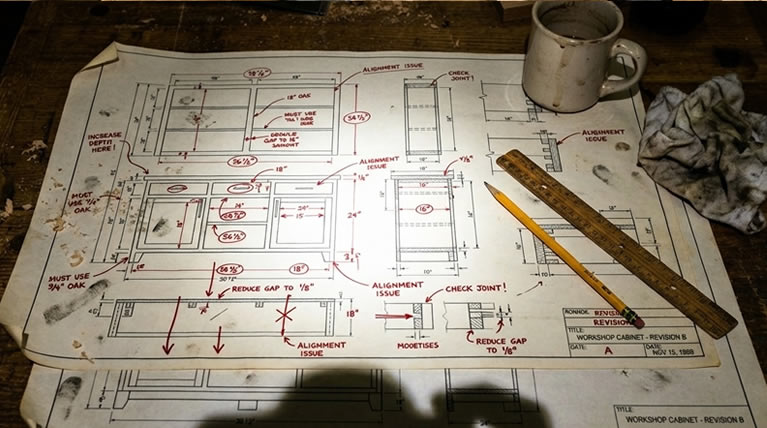
That last one is not hypothetical. We told the story of a shop teacher whose "professional" cabinet plan did exactly that in A Shop Teacher Followed a Cabinet Plan to the Letter. Every Shelf Came Out Short.
Working with actual sizes: a checklist
- Measure the real thickness and width of your boards with a tape or a ruler before you cut anything. Write the numbers on the plan.
- Redo any cut-list math that assumed nominal sizes (look for round numbers like 1, 2 and 4).
- Cut the parts that fit between other parts (shelves, rails, braces) last, and measure them off the assembled project.
- Buy all boards for one project from the same stack, so thickness and moisture match.
- Square one factory end before measuring the first length.
- Let lumber sit in your shop for a few days before cutting; wet boards keep shrinking (see the moisture numbers for your state below).
Wet lumber is a size problem too
A board stamped dry can still hold up to 19% moisture, and outdoor wood in most of the country settles somewhere between about 9% and 16% depending on the month and the place. Pressure-treated lumber is often sold much wetter unless it is stamped KDAT (kiln-dried after treatment). As the wood dries to its surroundings it shrinks a little more across its width. Our wood moisture by state pages show the numbers for your area.